

GHK-CU COPPER
Dhs. 270.00
Skip to product information
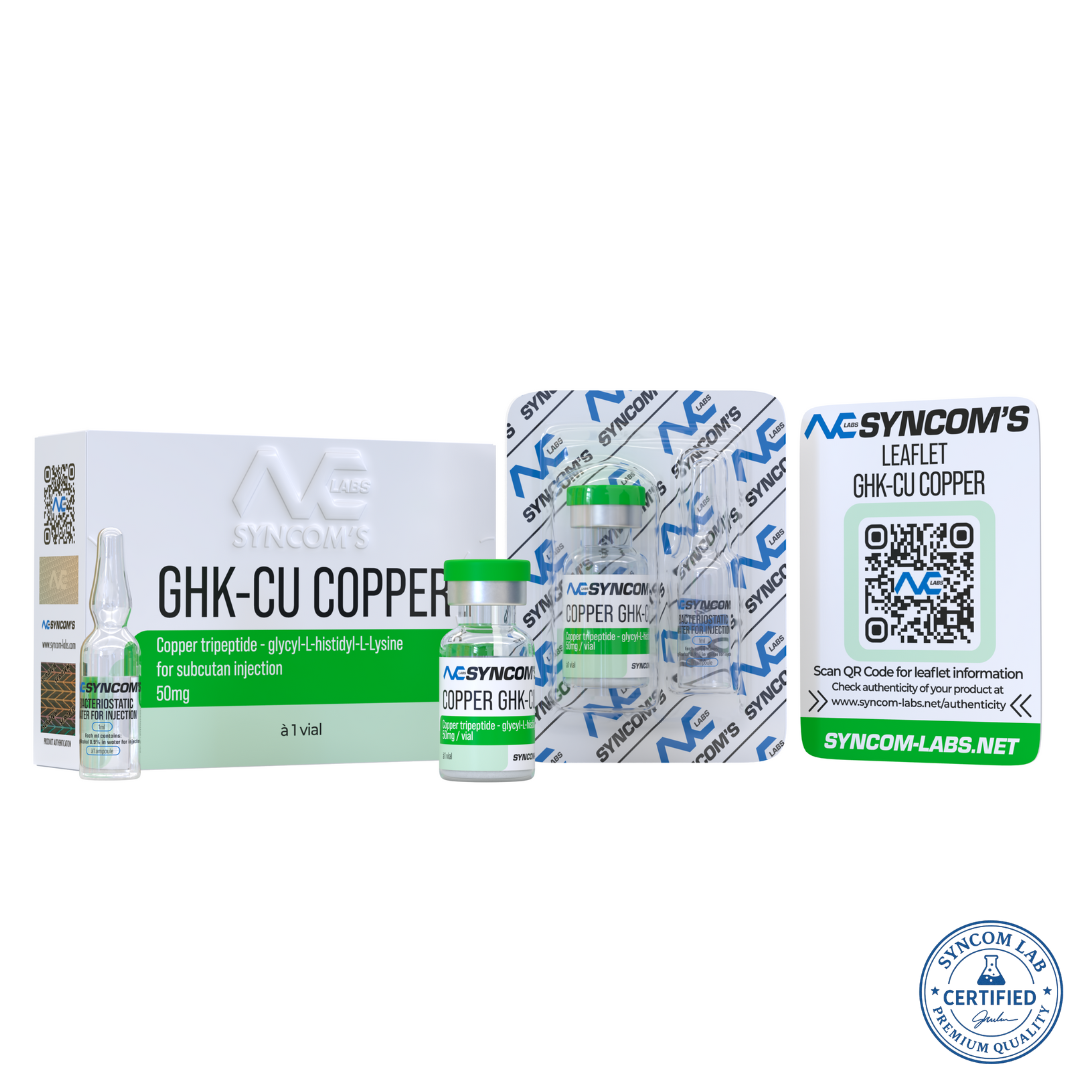

GHK-CU COPPER
Dhs. 270.00
GHK‑Cu (glycyl‑L‑histidyl‑L‑lysine copper complex) is a naturally occurring copper‑binding peptide found in human plasma, saliva, and urine that declines with age. It plays a central role in tissue regeneration, extracellular matrix modulation, collagen production, wound repair, and anti‑inflammatory processes. Due to its broad regenerative and protective effects, GHK‑Cu is widely studied in cosmetic, dermatological, and regenerative medicine applications.
⚗️ Product Features
-
🧪 Naturally occurring copper‑binding tripeptide
-
🌿 Modulates gene expression linked to tissue regeneration
-
📈 Stimulates collagen, glycosaminoglycans & elastin pathways
-
🛡️ Exhibits antioxidant and anti‑inflammatory activity
-
✅ ≥98 % purity verified by HPLC
-
📄 Batch‑specific Certificates of Analysis (COAs) included
-
💉 Sterile, lyophilized peptide for research applications
⭐ Key Benefits
-
✨ Supports skin rejuvenation and anti‑aging research
-
⛑️ Enhances tissue repair and wound healing processes
-
🔁 Promotes collagen synthesis & extracellular matrix modulation
🔬 Human‑Relevant Research Applications
🩹 Skin Regeneration & Collagen Modulation
GHK‑Cu has been shown to stimulate collagen production, glycosaminoglycan synthesis, and extracellular matrix remodeling — key pathways in skin health, firmness, and elasticity — and modulates the activity of enzymes involved in tissue repair.
🔗 https://pubmed.ncbi.nlm.nih.gov/26236730/ — GHK‑Cu stimulates collagen and extracellular matrix synthesis and acts as a natural modulator of skin regeneration pathways.
🛡️ Anti‑Inflammatory & Protective Actions
GHK‑Cu influences signaling related to oxidative stress and inflammation, supporting pathways that protect tissues from damage and may reduce inflammatory cytokine responses in research contexts, making it relevant for studies on aging and recovery.
🧾 Mechanism Summary
-
🧬 Gene modulation: Affects thousands of genes tied to repair and regeneration
-
📈 Extracellular matrix support: Promotes collagen, elastin & related structural proteins
-
🛡️ Anti‑inflammatory & antioxidant effects: Reduces stress‑related pathways
-
🔄 Wound & tissue remodeling: Supports multiple phases of repair and remodeling
🔄 Reconstitution & Handling Guidance
1️⃣ Reconstitute with sterile bacteriostatic water
2️⃣ Add appropriate volume per research protocol
3️⃣ Gently swirl — do not shake
4️⃣ Store reconstituted peptide at 4 °C – 10 °C
5️⃣ Keep unopened vials refrigerated until use
❓ Frequently Asked Research Questions
What biological pathways is GHK‑Cu involved in?
GHK‑Cu modulates gene expression related to collagen synthesis, extracellular matrix production, antioxidant defense, and repair processes — pathways central to skin regeneration and anti‑aging research.
How does GHK‑Cu support tissue healing?
It enhances biochemical signaling for collagen and glycosaminoglycan production, recruits immune and endothelial cells to injury sites, and promotes remodeling of connective tissue.