

OXYTOCIN
Dhs. 250.00
Skip to product information
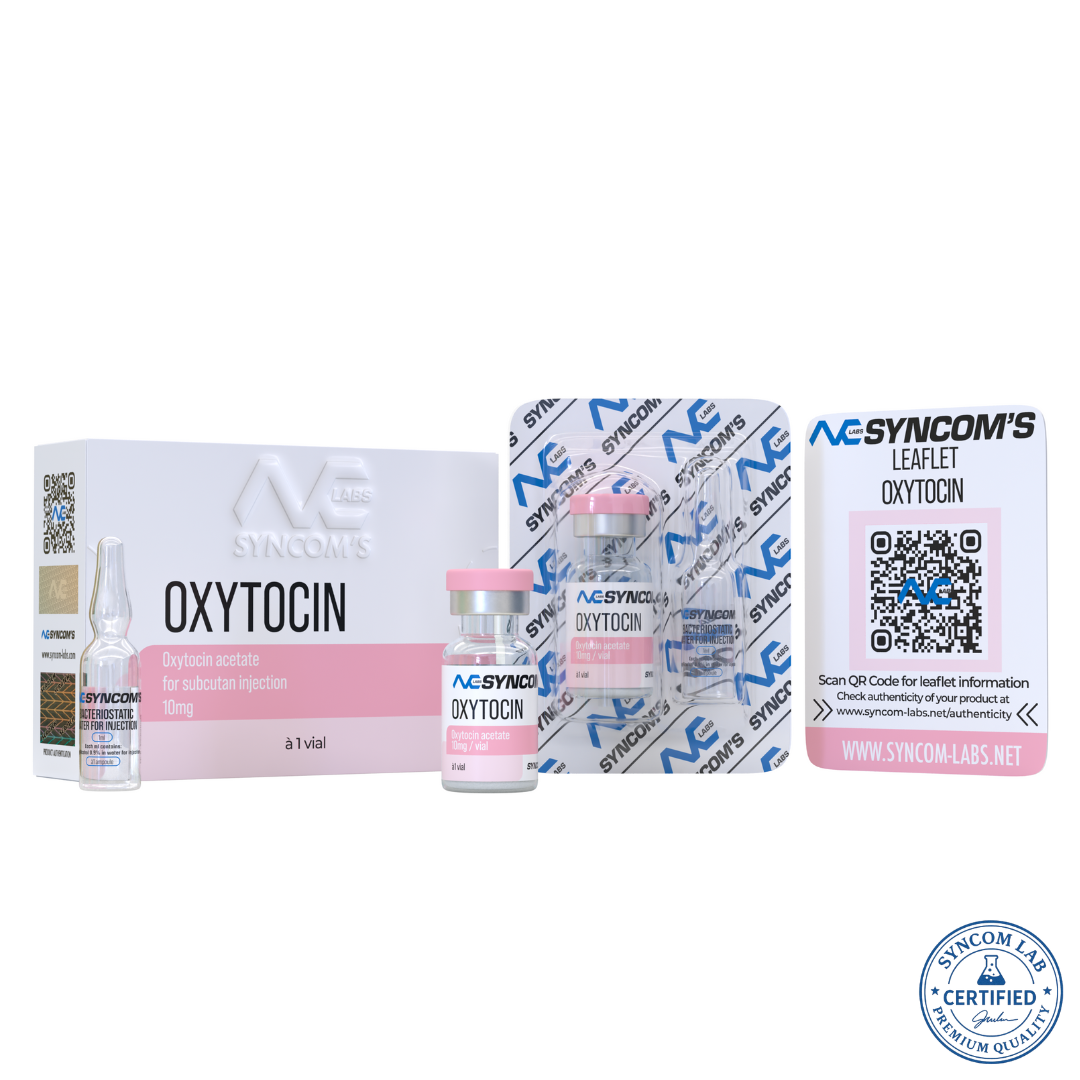

OXYTOCIN
Dhs. 250.00
Oxytocin is a naturally occurring peptide hormone often referred to as the “bonding” or “love hormone.” It plays a central role in social bonding, trust, emotional regulation, and stress response modulation. While best known for its effects in childbirth and lactation, oxytocin is widely studied in human research for its impact on mood, social behavior, stress regulation, and emotional resilience.
By influencing neural pathways involved in trust, empathy, relaxation, and stress balance, oxytocin is explored in wellness and longevity research as a peptide that supports emotional well-being, social connection, and adaptive stress responses.
Key Features
🧪 cGMP manufactured in an FDA-registered facility
✅ ≥98% purity confirmed by HPLC analysis
📄 Batch-specific Certificates of Analysis (COAs) included
💉 Sterile, lyophilized vials for research use only
Human-Relevant Research Applications
💞 Social bonding & interpersonal trust
Human studies show oxytocin administration increases interpersonal trust behavior, supporting research into social affiliation and cooperative behavior.
🔗 https://www.nature.com/articles/nature03701/
🌱 Emotional regulation & well-being
Clinical reviews indicate that oxytocin release is associated with calmness, improved social interactions, reduced fear responses, and enhanced emotional well-being.
🔗 https://pubmed.ncbi.nlm.nih.gov/20584551/
🧠 Stress response modulation & resilience
Research highlights oxytocin’s role in regulating stress pathways and promoting adaptive coping responses, which are key components in human stress and resilience studies.
🔗 https://pubmed.ncbi.nlm.nih.gov/35008574/
Mechanism Summary
-
Acts centrally and peripherally to influence social and emotional neural circuits
-
Modulates hypothalamic-pituitary-adrenal axis activity involved in stress responses
-
Enhances neural pathways associated with trust, empathy, and social perception
-
Provides a human-relevant model for studying emotional regulation and social behavior
Reconstitution & Handling Guidance
1️⃣ Use sterile bacteriostatic water (0.9% benzyl alcohol)
2️⃣ Add 3 ml of bacteriostatic water to reconstitute the peptide
3️⃣ Gently swirl until fully dissolved (do not vortex)
4️⃣ Store reconstituted peptide at 4 °C–10 °C for 2–3 months
5️⃣ Unreconstituted peptide may be stored at 4 °C–10 °C until the expiration date
Legal & Research Disclaimer
This material is supplied exclusively for laboratory research use. It is not intended for diagnostic, therapeutic, cosmetic, human, or veterinary applications. The purchaser assumes all responsibility for compliance with applicable local, state, and federal regulations governing research compounds.